
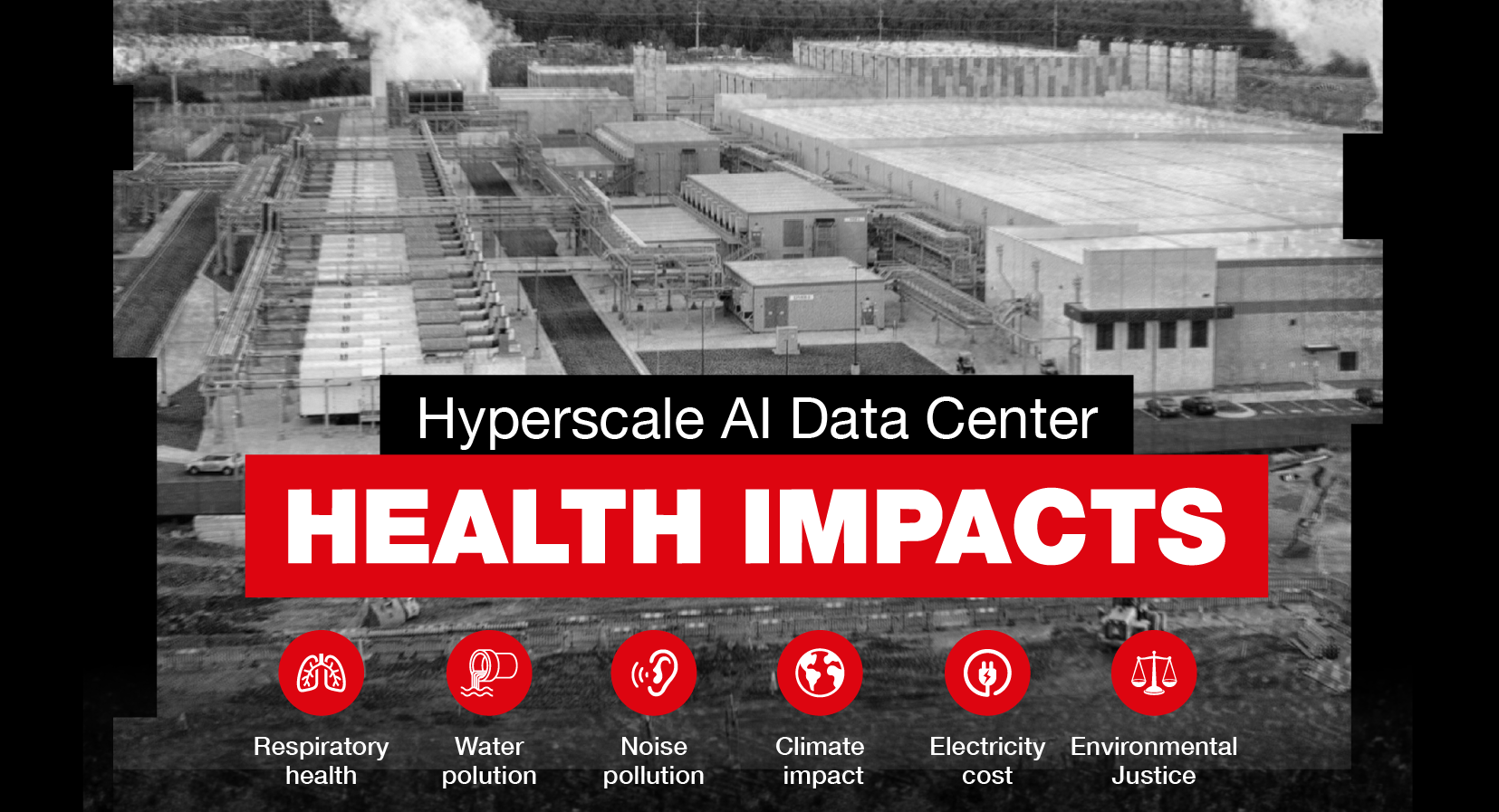
What happens in your backyard matters
AI data centers are public health concern for the local Colorado communities like yours.
The impact of AI data centers is a main street concern. It's a fast-growing, evidence-backed public health issue playing out block by block, often in communities with the least capacity to push back. The health costs are measurable, the pollution travels beyond the fenceline, and the communities living closest to these facilities are asking “what can we do”?
BY THE NUMBERS

The Evidence
Hyperscale Data Center Pollution Costs $Billions
"These massive facilities not only strain already stressed power grids but also create air pollution, including fine particulate matter, resulting in significant respiratory-related health consequences that are estimated to cost up to $20 billion per year in the United States by 2028."
Source: Harvard Business Review: Mitigating the Public Health Impacts of AI Data Centers* referencing the Univ. of California Study: Health-Informed Computing: Estimating and Addressing the Public Health Impact of Data Centers
Nationwide Opposition
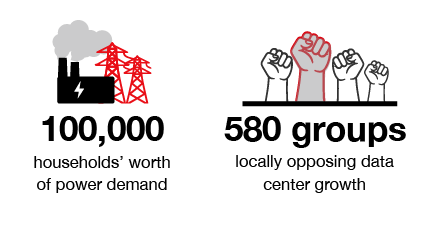
According to this August 2026 Data Center Opposition report, there are at least 580 local data center opposition groups nationwide totaling over 640,000 members, with at least one new opposition group forming every day.
Local Air Quality Impacts — Data Center Diesel Backup Generators Release Toxic Air Pollutants.
Data Centers generally rely on diesel backup generators that are frequently tested for hours and sometimes used for extended periods.
Local Health Impacts: Emissions of particulate matter and nitrogen oxide pollution from diesel generators exacerbate existing asthma, COPD and other respiratory conditions and increase the risk of respiratory and cardiovascular disease for neighboring residents. In Colorado, The Coresite Data Center in North Denver will have 14 generators operating in close proximity to a new senior living facility, a health clinic, and hundreds of homes.
See Report Diesel Generators at Data Centers: Status, Impacts and Protective Practices, March 2026
Regional Air Quality Impacts — Data Center Energy Demands Increase Reliance on Fossil Fuel Power Generation.
The massive energy demands of each "hyperscale" or "large-load" data center, is typically equal to that of 100,000 households. This demand increases pressure to keep polluting coal plants running longer and/or to construct new gas-fueled power plants on and/or off-site.*
Regional Health Impacts: Coal and gas power generation emits air pollutants including NOx, PM2.5 and ozone precursors that degrade air quality and harm respiratory and cardiovascular health across multi-county regions, including the Front Range nine-county ozone non-attainment area. Greenhouse gas emissions from coal and gas plants slows progress toward Colorado's climate protection goals, while data centers contribute to urban heat islands and eliminate shade and local vegetation as days of extreme heat increase.
Noise and Light Pollution Disrupts Local Residents' Sleep and Mental Health:
— Environmental Health Project: The Dangers of Data Centers
Noise health impacts - Diesel generators plus HVAC systems create a constant hum that may exceed 90 decibels. Noise levels above 85 decibels are harmful to hearing and ambient noise disrupts sleep patterns.
Light health impacts - Data centers generate light pollution. Large scale facilities require all-night lighting that disrupts sleep-wake cycles. 24 hour light pollution prevents ozone from dissipating overnight. Reference: Data Center Light Pollution: DarkSky's Statement on Responsible Development
*Respiratory Health Burdens:
"The released air pollutants include PM2.5 and nitrogen oxides (NOx). Often called 'silent killers', these air pollutants can penetrate deep into the lungs and are linked to a variety of health outcomes, such as asthma, lung cancer, heart attacks, and even premature deaths. Importantly, air pollutants like PM2.5 are considered 'non-threshold', meaning there is no safe level and any increase poses a health risk." "…Even short-term exposure, lasting from just 30 minutes to 24 hours, can trigger breathing problems, especially for vulnerable individuals with preexisting lung conditions. Moreover, these pollutants can travel hundreds of miles with the wind, raising air pollutant concentrations in communities far from the emission source."
— Harvard Business Review: Mitigating the Public Health Impacts of AI Data Centers,
Key Resources
Harvard Business Review: Mitigating the Public Health Impacts of AI Data Centers
Health-Informed Computing: Estimating and Addressing the Public Health Impact of Data Centers
Fueling Sickness: The Hidden Health Costs of Fossil Fuel Pollution
Additional issues
Electronic Waste: The Lancet - Health Consequences of Electronic Waste (e-waste)
Water Consumption: Environmental and Energy Study Institute (EESI) report
GES "Good Neighbor" proposal 9 News "Denver's Elyria-Swansea battles new CoreSite data center amid environmental and community concerns"